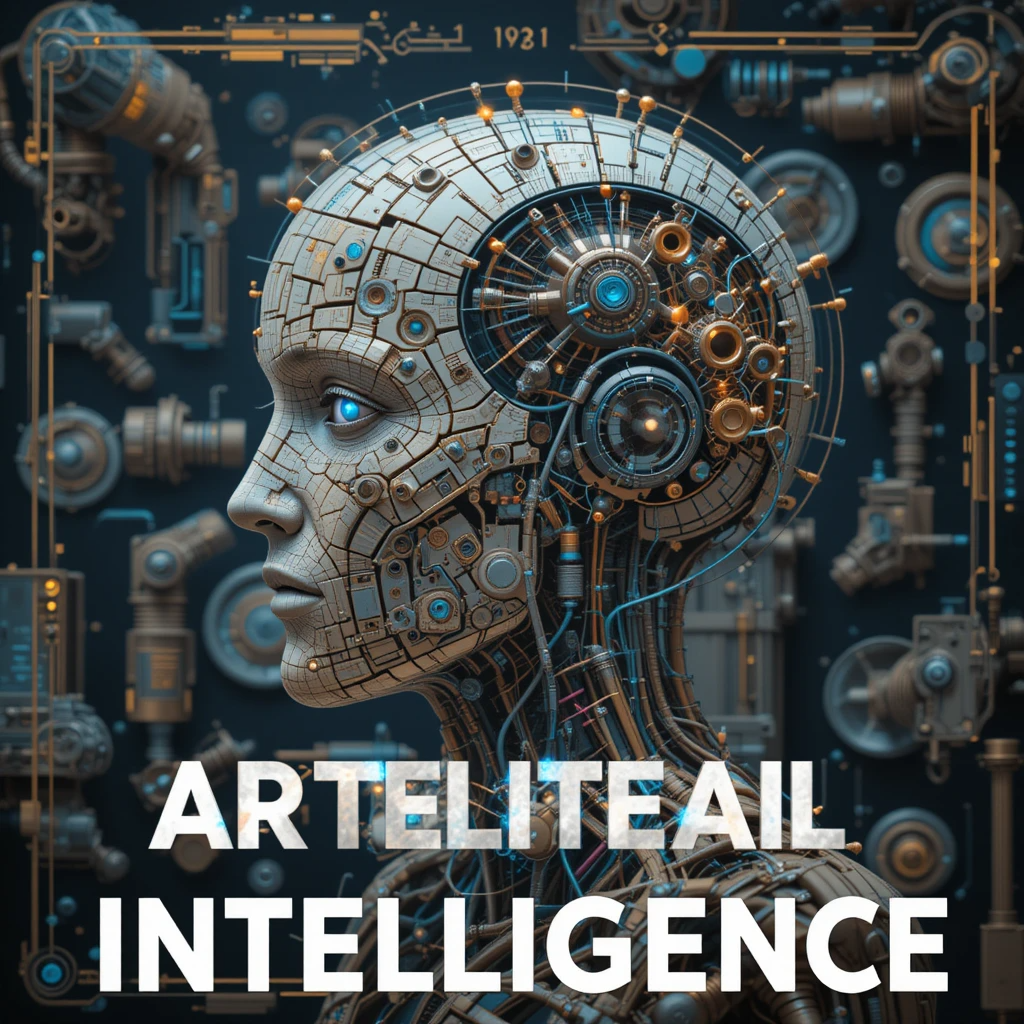
Artificial Intelligence (AI) has evolved from a futuristic concept to an integral part of modern society. From basic algorithms to sophisticated neural networks, AI’s journey has been a story of scientific breakthroughs, innovation, and, at times, even controversy. This article takes you through the fascinating history of AI, from its early roots to the cutting-edge technologies that define AI today.
The Early Beginnings of AI
The concept of creating machines with intelligence can be traced back centuries, long before computers existed. Ancient philosophers like Aristotle pondered the nature of human thought, and early inventors dreamed of automating processes. However, the term “Artificial Intelligence” was first coined in the mid-20th century. Let’s look at some of the key milestones in AI’s early history:
- The Turing Test (1950): British mathematician and logician Alan Turing proposed the famous “Turing Test” as a measure of a machine’s ability to exhibit intelligent behavior. Turing’s work laid the foundation for much of AI’s theoretical framework.
- The Birth of AI as a Field (1956): The field of AI was officially born during the Dartmouth Conference in 1956, organized by John McCarthy, Marvin Minsky, Nathaniel Rochester, and Claude Shannon. It was here that the term “Artificial Intelligence” was coined, and the idea that machines could simulate human intelligence began to take shape.
Early AI Developments: The 1950s to 1970s
In the early days, AI was a highly theoretical field with little practical application. Researchers focused on developing algorithms and theories about how machines might be able to think and reason like humans. Some early milestones include:
- Logic Theorist (1956): Developed by Allen Newell and Herbert A. Simon, the Logic Theorist was one of the first AI programs. It was capable of proving mathematical theorems using symbolic logic, an early demonstration of machine reasoning.
- ELIZA (1966): Created by Joseph Weizenbaum, ELIZA was an early natural language processing program. It could simulate conversations by using pattern-matching techniques, making it one of the first chatbot-like systems.
- Shakey the Robot (1969): Developed by the Stanford Research Institute, Shakey was one of the first robots to combine perception, reasoning, and action. It could navigate its environment, perform tasks, and make decisions.
The AI Winter: 1970s to 1990s
Despite early successes, AI faced significant challenges in the 1970s and 1980s. Progress was slower than expected, and many researchers became disillusioned with the field, leading to what is known as the “AI Winter.” This period was marked by a reduction in funding and interest in AI research.
Several factors contributed to this decline:
- Limited Computing Power: Early computers were not powerful enough to handle the complex calculations required for AI.
- Overly Ambitious Predictions: Many early AI researchers had unrealistic expectations, which led to disappointment when progress didn’t meet the hype.
- Lack of Practical Applications: While AI showed promise in theory, it wasn’t yet able to perform tasks that had real-world value.
Despite these setbacks, AI research continued in the background, and some advances were made, especially in the areas of expert systems and machine learning.
The Rise of Machine Learning: 1990s to 2000s
The 1990s and early 2000s marked a turning point for AI, thanks to improvements in computing power and the emergence of machine learning (ML) techniques. Machine learning, a subset of AI, focuses on algorithms that allow machines to learn from data rather than relying solely on pre-programmed rules.
Key developments during this period include:
- Deep Blue Defeats Garry Kasparov (1997): IBM’s Deep Blue, a chess-playing computer, made headlines by defeating world champion Garry Kasparov. This victory demonstrated the power of AI in a highly complex task that was once thought to be exclusively human.
- Support Vector Machines (1990s): Support Vector Machines (SVM) became one of the most widely used machine learning algorithms during this time, allowing machines to classify data and make predictions.
- Speech and Image Recognition: In the 2000s, AI began to improve in areas like speech recognition (e.g., Siri, Google Now) and image recognition, enabling AI-powered applications to interact more naturally with users.
The AI Boom: 2010s to Present
The 2010s marked the beginning of a new era in AI development, characterized by breakthroughs in deep learning, big data, and neural networks. Advances in computational power and the availability of large datasets allowed AI to make significant strides in areas previously thought to be the domain of humans.
Some of the key advancements during this period include:
- Deep Learning: Deep learning, a subset of machine learning, uses artificial neural networks to model complex patterns in large datasets. It has been particularly successful in areas like image and speech recognition, natural language processing, and autonomous systems.
- AlphaGo (2016): Developed by DeepMind, AlphaGo became the first AI to defeat a world champion Go player, a game far more complex than chess. This victory showcased the power of deep learning and reinforcement learning.
- AI in Everyday Life: AI became a ubiquitous part of daily life through technologies like self-driving cars, voice assistants (e.g., Alexa, Google Assistant), and recommendation systems (e.g., Netflix, Amazon). AI is now embedded in applications across virtually every industry.
- AI in Healthcare: AI is revolutionizing healthcare with applications ranging from drug discovery to personalized medicine and diagnostic tools. AI-powered systems can now analyze medical data, detect diseases, and even assist in surgery.
The Future of AI
AI has come a long way since its inception, but we’re only scratching the surface of its potential. In the coming years, AI is expected to continue transforming industries, driving innovations in robotics, healthcare, transportation, and more. There are also growing concerns about the ethical implications of AI, including issues related to privacy, bias, and job displacement.
Despite these challenges, the future of AI holds immense promise. As AI becomes more integrated into our daily lives, it is likely to play an increasingly important role in solving some of the world’s most pressing problems.
Conclusion
The history of Artificial Intelligence is a story of progress, setbacks, and breakthroughs. From the early days of theoretical research to the rise of machine learning and deep learning, AI has evolved into one of the most powerful technologies of the 21st century. As we look to the future, AI’s potential to transform industries and improve lives is boundless. However, it is important that we proceed with caution, addressing the ethical and social implications that accompany this technology.
FAQs
- When was AI first introduced as a field of study?
AI was officially introduced as a field of study during the Dartmouth Conference in 1956. - What was the first AI program?
One of the first AI programs was the “Logic Theorist,” developed by Allen Newell and Herbert A. Simon in 1956. - What caused the AI Winter?
The AI Winter was caused by a combination of unrealistic expectations, limited computing power, and the lack of practical applications for AI. - How did AI improve in the 1990s?
AI improved in the 1990s due to the rise of machine learning algorithms and increased computing power. - What is the future of AI?
The future of AI includes advancements in areas like healthcare, autonomous systems, and ethics, as well as the potential for solving complex global challenges.