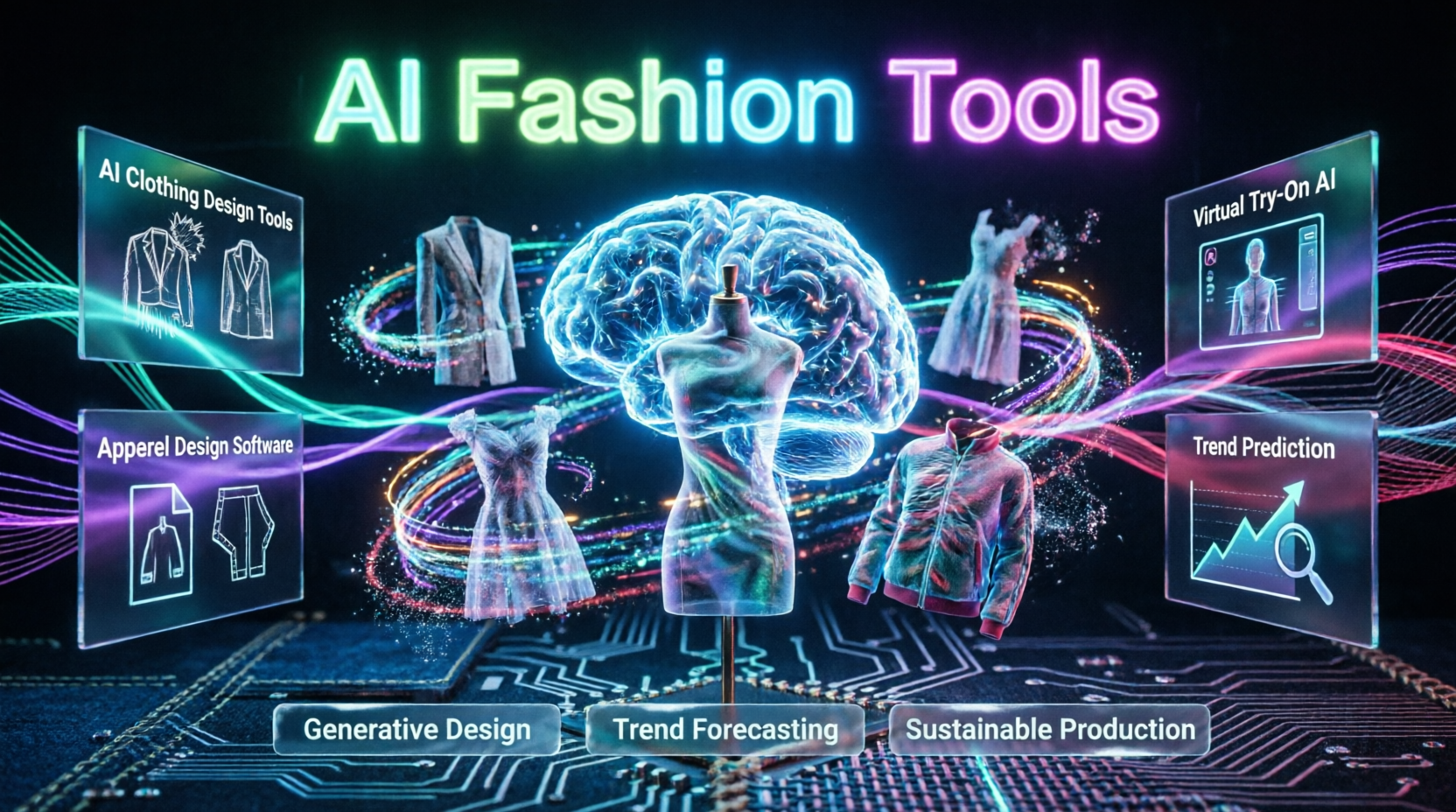
Mastering the deployment of AI fashion tools has become the definitive competitive advantage for modern designers, brands, and retailers looking to accelerate innovation, reduce waste, and maximize profitability. In an era where consumer demands shift rapidly and sustainability is no longer optional, relying on manual sketching, gut-feeling trend forecasting, and high-return e-commerce models is no longer a viable strategy for growth. Today, forward-thinking fashion houses and retail giants are leveraging advanced generative AI, computer vision, and predictive analytics to streamline workflows, personalize the shopping experience, and optimize supply chains. If you are looking to understand exactly how to integrate these technologies into your creative and operational pipeline, you are in the right place.
This comprehensive guide demystifies the landscape of intelligent fashion technology. We will explore the capabilities of cutting-edge AI clothing design tools, detail the transformative impact of a sophisticated AI fashion generator, and provide a strategic blueprint for utilizing virtual try-on AI. By the end of this article, you will have a clear, actionable framework for implementing AI fashion trend prediction, selecting the right AI apparel design software, and driving measurable growth through intelligent automation.
1. The Fashion Revolution: Why AI Fashion Tools Matter in 2026
Historically, the fashion industry was characterized by long, rigid production cycles, heavy reliance on physical sampling, and trend forecasting based on historical sales data and instinct. This traditional model was not only slow and expensive but also contributed significantly to global textile waste, as brands overproduced items that ultimately did not resonate with consumers.
The integration of AI fashion tools represents a quantum leap in both creative agility and operational sustainability. Unlike legacy design software that merely digitizes manual drafting, modern AI-driven platforms actively collaborate with designers, generate infinite variations in seconds, and predict consumer demand with remarkable accuracy. According to recent research by McKinsey & Company, fashion brands that fully embrace AI across their value chain report a 20-30% reduction in time-to-market, a significant decrease in return rates, and a measurable improvement in gross margins. This shift transforms fashion from a reactive, guesswork-heavy industry into a proactive, data-driven ecosystem.
2. From Sketch to Screen: AI Clothing Design Tools and AI Apparel Design Software
The creative process is being radically redefined by AI clothing design tools and advanced AI apparel design software. These platforms bridge the gap between abstract inspiration and production-ready technical specifications.
Generative Design and Rapid Prototyping Modern AI clothing design tools allow designers to input text prompts, mood boards, or rough sketches, and instantly generate hundreds of high-fidelity design variations. Instead of spending days manually drafting patterns or rendering fabrics, a designer can prompt the AI to “generate a structured blazer with exaggerated shoulders in a sustainable hemp blend, inspired by 1980s avant-garde,” and receive multiple viable concepts in seconds.
Automated Tech Pack Generation One of the most tedious aspects of fashion design is creating the tech pack—the comprehensive document containing flat sketches, measurements, bill of materials (BOM), and construction details required by manufacturers. Advanced AI apparel design software can automatically extract these details from a 3D garment simulation or a 2D generative output, creating accurate, standardized tech packs that reduce miscommunication with overseas factories and accelerate the sampling phase.
Sustainable Material Simulation Leading AI apparel design software now integrates hyper-realistic 3D fabric simulation. Designers can drape digital garments on avatars to see exactly how a specific textile (e.g., heavy denim vs. fluid silk) will behave under gravity and movement. This drastically reduces the need for physical prototypes, cutting material waste and carbon emissions associated with shipping samples back and forth.
3. Visualizing the Future: AI Fashion Generator and Virtual Try-On AI
For retailers and e-commerce brands, the challenge is not just designing the product, but presenting it to the consumer in a way that drives conversion and minimizes returns. This is where the AI fashion generator and virtual try-on AI shine.
Dynamic Lookbook Creation Traditionally, organizing a photoshoot for a new collection requires models, photographers, stylists, and locations a costly and time-consuming endeavor. An AI fashion generator can take a flat image of a garment and realistically map it onto diverse, AI-generated models of varying body types, ethnicities, and poses. Brands can instantly generate localized marketing assets, showing the same dress on a model in Tokyo, Paris, or New York, tailored to the specific aesthetic preferences of each regional market.
Reducing Returns with Virtual Try-On AI Sizing uncertainty is the primary driver of e-commerce returns, which cost the fashion industry billions annually. Virtual try-on AI solves this by allowing customers to upload a photo of themselves or use their smartphone camera to see exactly how a garment will fit and drape on their unique body shape. Advanced implementations use augmented reality (AR) and computer vision to simulate fabric tension, fit, and movement in real time. This immersive experience not only boosts consumer confidence and conversion rates but also dramatically slashes return rates and the associated logistical costs.
4. Staying Ahead: AI Fashion Trend Prediction and Inventory Optimization
Designing beautiful clothes is only half the battle; producing the right quantities of the right items is what ensures profitability. AI fashion trend prediction is revolutionizing how brands plan their collections and manage inventory.
Hyper-Local and Micro-Trend Forecasting Traditional forecasting relied on biannual reports from trend agencies. Today, AI fashion trend prediction algorithms continuously scrape and analyze millions of data points from social media (TikTok, Instagram), search engine queries, runway shows, and even street-style photography. By identifying emerging micro-trends (e.g., a sudden spike in interest for “crochet bucket hats” or “metallic silver trousers”) weeks or months before they hit the mainstream, brands can pivot their design and production strategies to capitalize on the demand.
Demand Forecasting and Inventory Allocation Overproduction is the fashion industry’s most critical sustainability and financial challenge. AI models analyze historical sales data, current trend momentum, weather patterns, and even local events to predict exactly how many units of a specific SKU will sell in a specific store or region. This allows retailers to optimize inventory allocation, minimize deadstock, and strategically plan markdowns, ensuring that capital is not tied up in unsold merchandise.
5. Choosing the Right AI Fashion Tools for Your Brand
With a rapidly expanding market of fashion-tech vendors, selecting the right AI fashion tools requires careful evaluation of your specific organizational needs, creative workflow, and technical infrastructure.
Seamless Integration with Existing Workflows Your AI stack must not disrupt your current operations. The best AI apparel design software integrates natively with industry-standard tools like CLO 3D, Browser, Adobe Illustrator, or your existing Product Lifecycle Management (PLM) and Enterprise Resource Planning (ERP) systems. Clunky, isolated platforms lead to low designer adoption and data silos.
Scalability and Customization Evaluate whether the tool can grow with your brand. A startup might need a lightweight AI fashion generator for quick social media content, while an enterprise retailer requires a robust, custom-trained AI fashion trend prediction model that ingests proprietary sales data. Ensure the vendor offers flexible API access and scalable pricing models.
Ethical AI and Copyright Compliance The fashion industry is highly protective of intellectual property. When evaluating AI clothing design tools, ensure the vendor uses ethically sourced training data and offers commercial usage rights for the generated outputs. Furthermore, the platform should have safeguards to prevent the AI from inadvertently replicating protected, copyrighted designs from other brands.
Tangible ROI and Sustainability Metrics Don’t just focus on the “cool factor.” Look for vendors that can demonstrate clear Return on Investment (ROI) through case studies. Ask specific questions: “How much does this reduce our physical sampling costs?” or “What is the average decrease in return rates for clients using your virtual try-on AI?”
6. Comprehensive Query Coverage
What are the best AI fashion tools for independent designers? For independent designers, the best AI fashion tools are those that offer high creative impact with low overhead. Platforms like Midjourney (for conceptual mood boarding), specialized AI clothing design tools like Relieve or The New Black, and accessible 3D software like CLO 3D provide enterprise-grade capabilities that allow solo creators to prototype and visualize collections without a large team.
How does an AI fashion generator improve marketing conversion rates? An AI fashion generator improves conversion by enabling hyper-personalized and diverse marketing. By instantly generating images of garments on models that reflect the brand’s actual customer demographics, brands can create more relatable, engaging content, which has been shown to significantly increase click-through and purchase rates.
Can virtual try-on AI accurately represent how a garment will fit? Yes, modern virtual try-on AI has advanced significantly. By utilizing precise body measurement data (either inputted by the user or captured via smartphone depth sensors) and advanced fabric physics simulation, these tools can accurately depict how a garment will drape, stretch, and fit, drastically reducing the uncertainty that leads to e-commerce returns.
How does AI fashion trend prediction differ from traditional forecasting? Traditional forecasting is reactive and based on historical, aggregated data. AI fashion trend prediction is proactive and real-time. It analyzes unstructured, real-time data from social media, search trends, and global events to identify micro-trends as they emerge, allowing brands to react with unprecedented speed and agility.
Is AI apparel design software secure for protecting unreleased collections? Yes, when implemented correctly. Reputable AI apparel design software providers offer enterprise-grade security, including private cloud deployment, end-to-end encryption, and strict non-disclosure agreements. They ensure that your proprietary designs and unreleased collections are never used to train public, shared AI models.
Conclusion
Mastering AI fashion tools is no longer a futuristic aspiration reserved for luxury conglomerates; it is a present-day imperative for any designer or retailer striving for sustainable growth, creative excellence, and operational efficiency. By moving beyond manual, reactive processes and embracing the power of AI clothing design tools, virtual try-on AI, and AI fashion trend prediction, brands can unlock unprecedented levels of agility, personalization, and profitability.
Whether you are deploying an AI fashion generator to create dynamic, inclusive marketing campaigns, utilizing AI apparel design software to eliminate physical sampling waste, or leveraging predictive analytics to optimize your inventory, the key to success lies in strategic, phased integration. AI should not replace the human creativity and artistic vision that define great fashion; rather, it should automate the heavy lifting, freeing your team to focus on innovation, storytelling, and building genuine connections with your audience.
As artificial intelligence continues to evolve, the gap between brands that leverage these tools and those that do not will only widen. Embrace the power of intelligent fashion technology today, and position your brand at the absolute forefront of the modern style revolution.