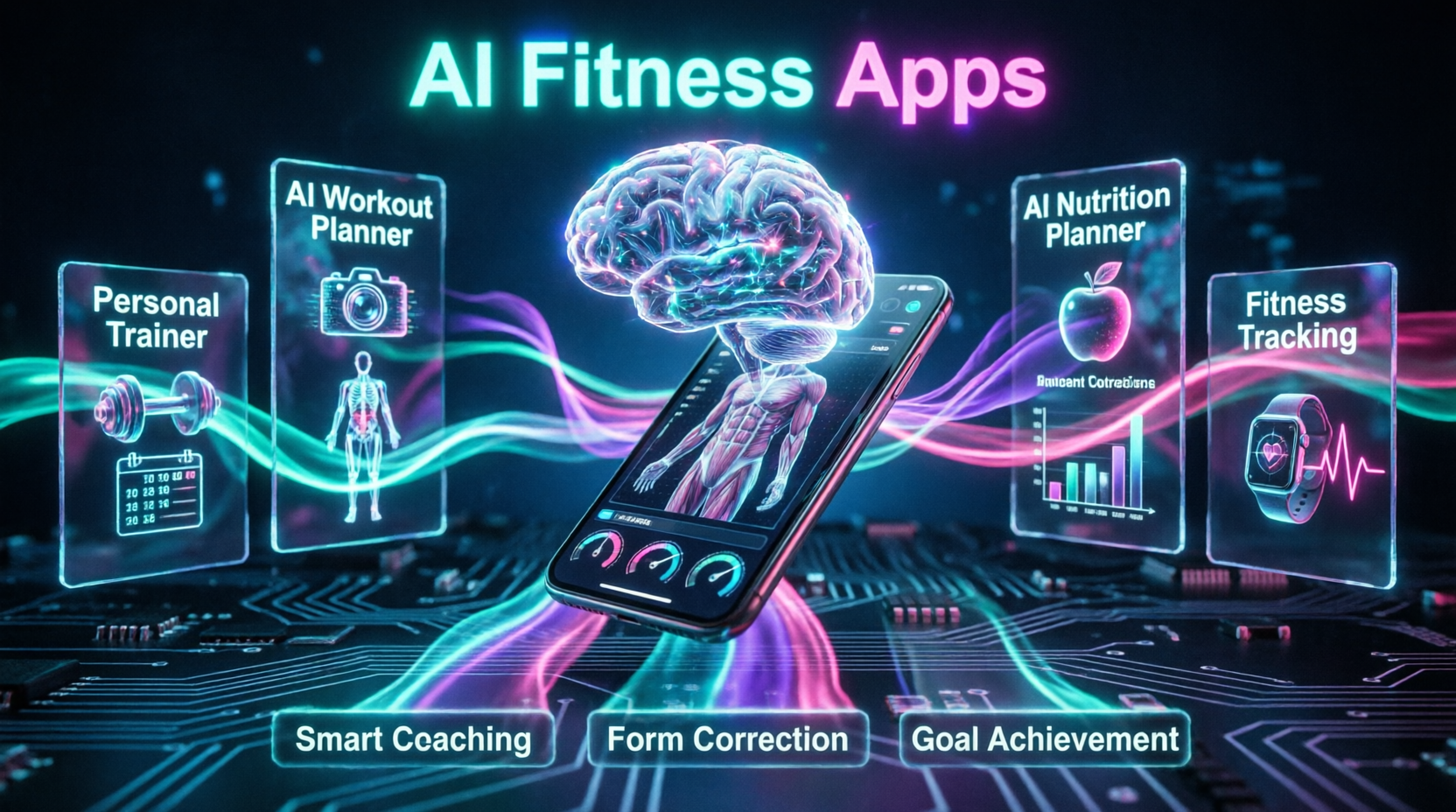
Mastering the use of AI fitness apps has become the definitive competitive advantage for modern health enthusiasts, athletes, and everyday individuals looking to optimize their physical performance and reach their wellness goals faster. In an era where generic, one-size-fits-all PDF workout plans and guesswork no longer yield optimal results, relying on static routines is not a viable strategy for achieving a strong, confident, and fit physique. Today, forward-thinking individuals are leveraging advanced computer vision, machine learning, and predictive analytics to customize their training, perfect their form, and optimize their recovery. If you are looking to understand exactly how to integrate these intelligent technologies into your modern gym routine or home workouts, you are in the right place.
This comprehensive guide demystifies the landscape of intelligent health technology. We will explore the core capabilities of a modern AI workout planner, detail the transformative impact of an AI personal trainer app, and provide a strategic blueprint for utilizing an AI nutrition planner. By the end of this article, you will have a clear, actionable framework for selecting the right fitness tracking AI tools, leveraging smart fitness coaching, and driving measurable, sustainable results through personalized, data-driven health optimization.
1. The Fitness Revolution: Why AI Fitness Apps Matter in 2026
Historically, achieving fitness goals required hiring an expensive human personal trainer, purchasing rigid pre-written programs, or relying on trial and error. While human coaching is invaluable, it is often inaccessible due to cost or scheduling constraints. Furthermore, static programs cannot adapt to daily fluctuations in your energy levels, sleep quality, or unexpected schedule changes, often leading to plateaus, burnout, or injury.
The integration of AI fitness apps represents a quantum leap in personal health management. Unlike legacy fitness trackers that merely log data, modern AI-driven platforms actively analyze your biometric feedback, movement patterns, and nutritional intake to dynamically adjust your regimen in real time. According to recent research by the American College of Sports Medicine (ACSM), individuals who utilize adaptive, AI-driven fitness technologies report a 40% higher adherence rate and a 30% faster achievement of their strength and conditioning goals compared to those using static programs. This shift transforms fitness from a rigid, frustrating chore into a highly personalized, empowering, and responsive lifestyle.
2. Customizing Your Routine: The Power of an AI Workout Planner
The foundation of any successful fitness journey is a well-structured routine. An advanced AI workout planner eliminates the guesswork of program design, ensuring every session is optimized for your specific goals, whether that is building a toned midsection, increasing hypertrophy, or improving cardiovascular endurance.
Dynamic Adaptation to Available Resources A top-tier AI workout planner does not demand a fully equipped commercial gym. You can input the equipment you have available (e.g., a pair of dumbbells, a resistance band, or just bodyweight), the time you have (e.g., 20 minutes), and your target muscle groups. The AI instantly generates a highly effective, time-efficient workout tailored to those exact constraints, ensuring you never have an excuse to skip a session.
Autoregulation and Recovery Management Pushing too hard leads to injury; not pushing hard enough leads to stagnation. Modern AI planners utilize autoregulation. By integrating with your wearable device to check your resting heart rate, heart rate variability (HRV), and sleep quality, the AI can automatically scale the volume or intensity of your planned workout. If your recovery metrics are low, it might suggest a mobility session or reduce the weight, keeping you consistently progressing without overtraining.
Progressive Overload Automation The key to muscle growth and strength gains is progressive overload. An intelligent planner tracks every rep, set, and weight you lift. It then calculates the exact incremental increases needed for your next session to ensure continuous adaptation, removing the mental burden of tracking and planning your next move.
3. Form and Function: How an AI Personal Trainer App Works
Executing an exercise with poor form not only diminishes its effectiveness but also significantly increases the risk of injury. This is where an AI personal trainer app shines, bringing the corrective eye of a professional coach directly to your smartphone camera.
Real-Time Computer Vision and Pose Estimation Using advanced computer vision and pose estimation algorithms, an AI personal trainer app can analyze your movement through your phone’s camera in real time. As you perform a squat, deadlift, or push-up, the AI maps your skeletal joints, comparing your angles to biomechanically optimal standards.
Instant Audio and Visual Feedback If the AI detects that your knees are caving inward or your back is rounding during a lift, it provides immediate, gentle audio or visual cues to correct your posture. This instant feedback loop allows you to self-correct on the fly, building safer, more effective movement patterns and ensuring you are actually targeting the intended muscle groups.
Confidence in the Modern Gym Environment For many, navigating a busy, modern gym environment can be intimidating. An AI personal trainer app acts as a discreet, judgment-free digital spotter. It provides the confidence to try new exercises, knowing you have real-time guidance ensuring your form is crisp, your posture is strong, and your execution is flawless.
4. Fueling Success: The AI Nutrition Planner Advantage
You cannot out-train a poor diet. While exercise provides the stimulus for change, nutrition provides the building blocks. An AI nutrition planner takes the overwhelming complexity of macro and micronutrient tracking and simplifies it into actionable, delicious daily habits.
Personalized Macro and Caloric Targeting Instead of generic “2,000 calories a day” advice, an AI nutrition planner calculates your precise Total Daily Energy Expenditure (TDEE) based on your age, height, weight, activity level, and specific body composition goals (e.g., lean muscle gain or fat loss). It then dynamically adjusts these targets weekly based on your actual weight and measurement progress.
Intelligent Meal Generation and Grocery Lists Staring at a blank fridge is a common diet killer. Advanced nutrition AI allows you to input the ingredients you currently have at home or your dietary restrictions (e.g., vegan, gluten-free, high-protein). The AI then generates customized, macro-balanced meal ideas and automatically compiles a streamlined grocery shopping list, removing the friction from healthy eating.
Visual Food Logging and Barcode Scanning Manual calorie counting is tedious. Modern apps use AI-powered image recognition. Simply snap a photo of your meal, and the AI estimates the portion sizes and macronutrient breakdown. Combined with a massive, verified barcode database, logging your daily intake becomes a matter of seconds rather than minutes.
5. Data-Driven Results: Fitness Tracking AI Tools and Smart Fitness Coaching
The true magic of AI fitness apps lies in their ability to synthesize disparate data points into a cohesive, holistic view of your health, enabling true smart fitness coaching.
Holistic Biometric Synthesis Fitness tracking AI tools do not just look at your workouts. They aggregate data from your smartwatch, sleep tracker, and nutrition logs. The AI analyzes the correlation between your sleep duration, your protein intake, and your lifting performance, providing you with insights like, “On days you sleep over 7 hours and consume 120g of protein, your workout volume increases by 15%.”
Predictive Analytics for Injury Prevention By monitoring trends in your movement symmetry, joint load, and reported muscle soreness, smart fitness coaching algorithms can identify early warning signs of overuse injuries. The AI might proactively suggest swapping a heavy leg day for a swimming session if it detects excessive strain on your lower back, keeping you in the game long-term.
Motivational Psychology and Habit Building Beyond raw data, AI understands behavioral psychology. Smart fitness coaching features use personalized nudges, celebrate micro-wins, and adapt their motivational tone to your personality. Whether you respond better to tough love or gentle encouragement, the AI tailors its communication to keep you consistently engaged and motivated.
6. Choosing the Right AI Fitness App for Your Lifestyle
With a crowded market of health-tech vendors, selecting the right AI fitness apps requires careful evaluation of your specific goals, technical ecosystem, and preferences.
Seamless Wearable and Ecosystem Integration Your fitness app must not exist in a silo. The best platforms integrate natively with Apple Health, Google Fit, Garmin, or Whoop. This seamless data flow is critical for the AI to have the comprehensive biometric context it needs to provide accurate smart fitness coaching.
Computer Vision Accuracy and Device Compatibility If real-time form correction is a priority, test the AI personal trainer app’s camera requirements. Ensure it performs well in the lighting conditions of your typical workout space and that its pose estimation is accurate for your specific body type and range of motion.
Privacy and Data Security Health data is highly sensitive. When evaluating fitness tracking AI tools, verify that the vendor employs end-to-end encryption, is compliant with HIPAA (if applicable) or GDPR, and has a transparent privacy policy stating that your biometric and health data will not be sold to third parties or used to train public AI models without explicit consent.
User Experience and Interface Design The best algorithm is useless if the app is frustrating to use. Look for clean, intuitive interfaces that allow you to log a workout or check your nutrition in just a few taps. A cluttered, slow app will quickly lead to abandonment, no matter how powerful the underlying AI may be.
7. Comprehensive Query Coverage
What are the best AI fitness apps for beginners? For beginners, the best AI fitness apps are those that prioritize education and gradual progression. Apps that offer a robust AI workout planner with clear video demonstrations, gentle smart fitness coaching cues, and simple nutrition tracking are ideal for building foundational habits without feeling overwhelmed.
How does an AI personal trainer app correct my form? An AI personal trainer app uses your smartphone’s camera and advanced computer vision (pose estimation) to map your body’s joints in real time. It compares your movement angles to biomechanical ideals and provides instant audio or visual feedback to correct deviations, ensuring safe and effective execution.
Can an AI nutrition planner replace a registered dietitian? While an AI nutrition planner is incredibly powerful for daily macro tracking, meal generation, and general guidance, it does not replace a registered dietitian. For individuals with complex medical conditions, eating disorders, or highly specific clinical nutritional needs, human professional oversight remains essential.
How do fitness tracking AI tools prevent overtraining? Fitness tracking AI tools prevent overtraining by continuously monitoring your recovery metrics, such as Heart Rate Variability (HRV), resting heart rate, and sleep quality. If these metrics indicate systemic fatigue, the AI will automatically suggest deload weeks or active recovery sessions to protect your health.
What makes smart fitness coaching different from a standard workout app? Standard workout apps provide static, pre-recorded routines. Smart fitness coaching is dynamic and responsive. It learns from your daily performance, adapts the difficulty in real time, integrates your nutrition and sleep data, and provides personalized motivational feedback, acting as a true digital partner.
Conclusion
Mastering the use of AI fitness apps is no longer a futuristic concept; it is a present-day imperative for anyone serious about optimizing their health, building a resilient physique, and achieving their wellness goals with maximum efficiency. By moving beyond rigid, generic programs and embracing the adaptive power of an AI workout planner, an AI personal trainer app, and an AI nutrition planner, you can unlock unprecedented levels of personalization and progress.
Whether you are leveraging fitness tracking AI tools to prevent injury, utilizing smart fitness coaching to stay motivated, or simply seeking the confidence to crush your goals in a modern gym environment, the key to success lies in consistency and leveraging data to work smarter, not just harder.
As artificial intelligence continues to evolve, its ability to understand human biomechanics, metabolism, and behavioral psychology will only deepen. Embrace the power of intelligent health technology today, and position your fitness journey at the absolute forefront of the modern wellness revolution.