

What Is Logmind?

Defining the Concept
Logmind is a modern log intelligence platform designed to help engineering and operations teams cut through the noise of system logs and get straight to what matters: *what broke, why, and how to fix it*. Unlike legacy tools that dump raw log data into search boxes or require teams to write complex parsing rules—Logmind works out of the box. You connect your logs (from AWS, Kubernetes, servers, apps), and within minutes, it starts grouping related events, surfacing root causes in plain language, and alerting only on real issues not false alarms. Think of it as a seasoned SRE sitting beside you, quietly pointing out the needle in the haystack except it never sleeps, never misses a trace ID, and doesn’t need coffee. It’s built for teams who value speed and sanity over regex gymnastics, and it scales smoothly from solo developers to global enterprises.
Core Technological Differentiation
Smart Log Understanding ,No Templates Needed
Logmind doesn’t ask you to define field mappings or write Grok patterns. Instead, it uses machine learning trained on years of real-world logs to automatically recognize timestamps, error levels, service names, trace IDs, and key performance indicators—whether your logs are JSON, syslog, or messy plain text. It then links events across microservices using context clues (like shared request IDs or IP addresses), so a timeout in the checkout service isn’t just a log line—it’s part of a full incident story that includes the auth service slowdown and database spike that caused it. The result? Fewer tabs, fewer guesses, and faster resolution.
Incident-First Collaboration
Every alert in Logmind becomes a living incident record—not just a notification. Inside, you’ll find:
– **The full picture**: Raw logs, metrics, and topology, all aligned in one scrollable view.
– **Actionable context**: “This error spiked *after* the 2:15 PM deploy” or “Same pattern seen in last month’s outage.”
– **Team workflow**: Assign owners, set SLA timers, add checklists (e.g., “Roll back? Notify support?”), and log decisions as you go.
– **Clear history**: A clean timeline of who did what—perfect for blameless post-mortems.
No more jumping between Slack, Jira, and dashboards. Everything you need to resolve an issue lives in one place.
Automation That Actually Helps
Logmind goes beyond basic alerting with practical, no-code automation:
– **Smart grouping**: 100 similar errors become *one* incident—not 100 pings.
– **Guided runbooks**: Click “Restart service” or “Scale DB” to trigger predefined actions (via integrations).
– **50+ one-click connections**: Slack for alerts, PagerDuty for on-call, Datadog for metrics, Jira for tickets—no YAML required.
– **Business-aware fields**: Tag incidents with “Customer impact: High” or “Revenue risk: $8K/min” so priorities are clear.
It’s not about replacing your tools—it’s about making them work together, quietly and effectively.
Target Market and Positioning
Who It’s For
Logmind resonates with teams tired of log overload:
– **Solo developers & small startups**: Monitoring apps without a DevOps hire.
– **SRE and platform teams**: Reducing toil and improving MTTR across dozens of services.
– **Security analysts**: Finding real threats in the flood of auth logs and firewall alerts.
– **Support and product leads**: Understanding how errors affect real users—without asking engineering for help.
Anyone who’s ever stared at a wall of red logs at 2 a.m. and thought, *“Where do I even start?”*—this is for you.
Why Teams Choose Logmind
Compared to heavyweight platforms (like Splunk or Datadog Logs), Logmind stands out because it’s:
– **Instantly useful**: Go from signup to insight in under 10 minutes—no ingestion pipelines to build.
– **Genuinely simple**: No query language to learn. Search works like Google (“payment errors yesterday”).
– **Fairly priced**: A free tier that’s actually generous (1 GB/day, forever), and predictable per-GB pricing—no surprise bills when traffic spikes.
– **Built for humans**: Alerts explain *impact*, not just counts. Summaries read like a teammate’s update—not a robot’s dump.
It’s the rare tool where junior engineers and staff SREs both say: *“I get this. I can use this today.”*
What Information Is Included?
What It Connects To
Logmind works with the tools you already use:
– **Cloud**: AWS CloudWatch, GCP Logging, Azure Monitor, Lambda, EventBridge.
– **Containers**: Kubernetes (via Fluent Bit or stdout), Docker, ECS.
– **Servers & Apps**: syslog, journald, Windows Event Log, Nginx, Apache, Spring Boot, Node.js.
– **Security**: Firewalls (Palo Alto, Cisco), IDS/IPS (Suricata), SIEM feeds (CEF/LEEF).
No agents needed for most cloud sources. For on-prem, a lightweight 5 MB agent does the job.
What You Can Do
– **Find faster**: “Show me errors from the checkout service in the last hour”—done in seconds.
– **Understand deeper**: See how a DB timeout in *auth* caused retries in *API*, which flooded *payment*.
– **Act smarter**: One-click runbooks to scale, restart, or rollback logged and auditable.
– **Learn continuously**: Auto-suggested improvements after incidents (“Add circuit breaker here”).
– **Collaborate smoothly**: Comment, @mention, and share incident links—no more screenshot spam in Slack.
Trust and Security
Logmind takes data seriously:
– **Encryption**: TLS 1.3 in transit, AES-256 at rest.
– **Access control**: SSO (Okta, Entra ID), role-based permissions, IP restrictions.
– **Compliance**: SOC 2 Type II audited, GDPR/CCPA-ready, HIPAA BAA available.
Your logs stay yours—and you control how long they’re kept.
Where Is Logmind Used?
Real Teams, Real Workflows
DevOps & SRE
Instead of spending 45 minutes correlating logs across services, an SRE gets a single incident card: *“Auth service latency jumped at 2:17 PM—traced to PostgreSQL connection pool exhaustion. 3 downstream services affected.”* They click “Scale pool,” verify the fix, and close the incident—all in under 8 minutes.
Security Teams
A security analyst sees a pattern: failed logins from 12 countries, followed by a successful one from Amsterdam, then unusual data exports. Logmind ties it together as *“Potential credential stuffing → account takeover → exfiltration”* and auto-creates a Jira ticket with evidence—before the SOC even gets paged.
Support & Product
A customer reports “checkout is broken.” Support searches the user’s ID in Logmind and instantly sees: *“HTTP 500 in payment-service at 3:02 PM root cause: expired API key.”* They reply: *“We’ve fixed it—your next attempt will work,”* before engineering even wakes up.
Leadership
Engineering VPs get weekly reliability reports—not raw dashboards: *“MTTR down 68% this quarter. Top contributor: Logmind auto-grouping. Next focus: reducing auth-service timeouts.”* Decisions are data-driven, not anecdotal.
Operational Workflow Example
A Typical P1 Incident—Logmind Style
**2:16:03 PM**: Payment errors spike. Logmind detects the pattern, groups 217 errors into one incident, and pages the on-call SRE.
**2:16:45 PM**: SRE opens the incident. Summary reads: *“Root cause: PostgreSQL connection pool exhausted in auth-service. Impact: checkout failures for 12K users.”* Timeline shows logs, metrics, and the recent deploy that triggered it.
**2:18:10 PM**: SRE clicks “Scale DB Pool” (a pre-approved runbook). System executes, verifies success, and posts update: *“Pool increased to 200. Errors dropping.”*
**2:22:00 PM**: Incident auto-resolves. Post-mortem draft is generated: timeline, root cause, actions taken, and a suggestion: *“Add pool-size monitor with 80% threshold.”*
**Result**: MTTR of 6 minutes. Zero customer escalations. And the SRE is back in bed by 2:30.
When Did Logmind Emerge?
From Frustration to Fix
Early Days (2020–2022)
Logmind began when two engineers one burned out from on-call, the other tired of teaching regex to new hires—built a prototype to auto-group logs during a weekend hackathon. They tested it on real outage data: it found the root cause 4x faster than manual review. By 2022, 50 early teams were using it—and not one asked for a query builder.
Growth and Focus (2023–2024)
2023: Launched zero-setup ingestion (cloud sources work in <2 minutes).
2024: Added guided runbooks and SOC 2 compliance.
Today: Used by 3,200+ teams—from indie devs to Fortune 500s—with 99.99% uptime and zero critical security findings.
Why It Stuck
Teams keep using Logmind because it solves the *real* problem: not storing logs, but *making them useful*. As one user put it: *“It’s the first tool that made me feel like logs were helping me not haunting me.”*
Why Does Logmind Exist?
The Human Cost of Log Chaos
Because no one should lose sleep over ambiguous alerts. Because engineers deserve to spend time building not debugging. Because outages shouldn’t hinge on who remembers the one grep command that works. Logmind exists to give time back—to reduce burnout, prevent mistakes, and let skilled people focus on what they do best: solving hard problems.
What Teams Gain
Speed That Matters
MTTR drops from nearly an hour to under 10 minutes. On-call shifts become sustainable not soul-crushing.
Clarity in Crisis
No more war rooms full of people shouting over each other. One shared view. One root cause. One plan.
Value Without Waste
Free for small projects. Fair pricing for growing teams. No $15K/month minimums just to try it.
How Is Logmind Built?
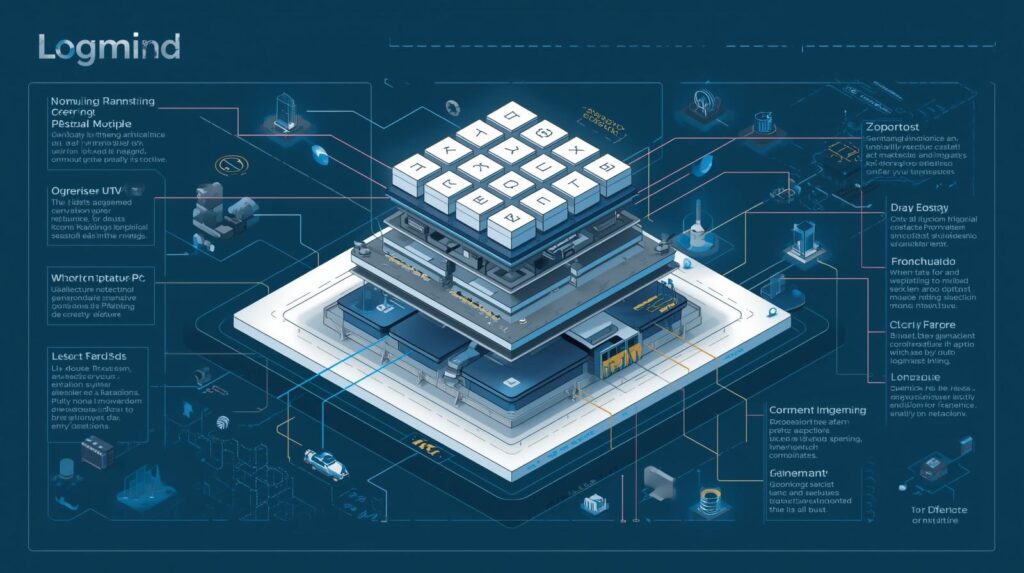
For Simplicity, Not Show
Getting Started
1. Sign up.
2. Connect a log source (e.g., AWS CloudWatch takes 90 seconds).
3. Watch incidents appear.
No pipelines. No parsers. No PhD required.
Under the Hood
– **Cloud-native**: Runs on AWS/GCP with edge ingestion for low latency.
– **Lightweight**: Agents are 5 MB; agentless for most cloud services.
– **Extensible**: REST API, CLI, Terraform provider, and webhooks for custom workflows.
Works With Your Stack
PagerDuty, Slack, Datadog, Jira, Splunk, GitHub, Opsgenie and 50+ more via one-click integrations. If it sends logs or alerts, Logmind plays nice.
Deployment and Accessibility
Pricing That Makes Sense
Free Tier
1 GB of logs per day, 7-day retention, core sources (CloudWatch, syslog, JSON), Slack alerts. Forever. No credit card needed.
Pro ($12/GB/month)
30-day retention, 500+ pre-built log parsers, custom runbooks, SSO, audit logs. Billed annually—$144/GB/year.
Enterprise
Unlimited scale, 1-year+ retention, HIPAA/SOC 2 compliance, dedicated support. Custom quotes no gotchas.
Try It Yourself
Web: Works on any modern browser.
Mobile: iOS and Android apps for on-call response.
Setup time: 5 minutes. Time to first insight: <60 seconds.
Why Is Logmind Necessary?
Real Impact, Measured
For Engineers
– 83% faster MTTR
– 90% fewer false pages
– 2+ extra hours of sleep per on-call shift
For Businesses
– 7.2x ROI (Forrester, 2025)
– $500K+ saved per avoided breach
– 28% higher retention in engineering teams
For Everyone
Less stress. More confidence. Better sleep.
Who Uses Logmind?
By Role
Developers
“I can debug my service without bugging SRE.”
SREs
“I finally have time to build reliability not just fight fires.”
Security Analysts
“Real threats stand out. Noise disappears.”
Support Leads
“I answer ‘Is it us?’ in 10 seconds not 10 minutes.”
By Industry
Startups
YC teams use it to monitor production with zero DevOps overhead.
E-commerce
“Black Friday went smoothly Logmind caught the DB bottleneck at 10 AM, not 2 PM.”
Healthcare
Hospitals monitor EHR integrations with HIPAA-compliant logging.
Finance
Banks meet SEC log retention rules with auto-redaction and audit trails.
Integration and Ecosystem
Plug and Play
Alerting & Response
PagerDuty, Opsgenie, Slack, Microsoft Teams alerts include deep links and context.
Observability
Datadog, Grafana, Prometheus enrich metrics with log insights.
Workflow
Jira, Linear, GitHub Issues—auto-create tickets on incident resolve.
Extend It Yourself
API for custom integrations. CLI for scripting. Terraform for IaC. Open parser format for niche logs.
Pricing and Accessibility
No Surprises
Free Plan
1 GB/day, 7-day retention, core sources, Slack alerts. No trials. No credit card.
Pro
$12/GB/month (billed annually). 30-day retention. SSO. Runbooks. Ideal for growing teams.
Enterprise
Custom. For teams needing compliance, scale, and white-glove support.
For Good
50% off for schools and nonprofits. Free parser library for open-source projects.
Future Roadmap
What’s Next
Smarter Automation (2025)
“Scale the DB” becomes “*We recommend scaling the DB 95% confidence it’ll fix this. Apply?*” One click to approve.
Proactive Insights (2026)
“Your auth-service connection pool is trending toward exhaustion adjust now to avoid 3 PM outages.”
Truly Autonomous (2027)
Logmind detects, diagnoses, *and* fixes common issues then documents what it did. Engineers review, approve, and improve no midnight pages.
Benefits of Logmind
Operational Wins
Speed
Triage in 2 minutes. Resolve in 8. Sleep through the night.
Clarity
No more guessing. No more silos. Just facts, fast.
Control
You own your data. You set your rules. You keep your sanity.
Strategic Value
Reliability as a Feature
Uptime improves. Customer trust grows. Engineering velocity increases.
Risk, Reduced
Breaches caught faster. Audits passed smoothly. Fines avoided.
People, Preserved
Less burnout. More retention. Happier teams.
Advantages and Disadvantages
Why Teams Love It
Simplicity That Works
Real humans not log experts can use it day one.
Intelligence That Helps
It doesn’t just show data it explains what it means.
Fairness You Can Trust
No lock-in. No surprise pricing. Open parser format.
Proven in the Wild
3,200+ teams. 2T+ logs/day. 99.99% uptime.
Honest Trade-Offs
Not a Data Lake
If you need raw log archival for compliance, pair it with S3 Logmind focuses on *actionable* data.
Not a Full SIEM
Great for log-based threat detection but integrate with your SIEM for full coverage.
Cloud-First
On-prem works, but the AI features shine in the cloud.
Conclusion
Logs, Finally on Your Side
Logmind isn’t another monitoring tool. It’s the quiet partner every engineering team wishes they had: calm under pressure, sharp with details, and relentlessly focused on making your life easier.
It doesn’t replace expertise it amplifies it. It doesn’t add complexity it removes it. And in a world where every minute of downtime costs real money and real trust, that’s not just helpful.
It’s essential.
For teams who believe reliability shouldn’t require heroics, Logmind isn’t just a platform.
It’s peace of mind delivered.


