

What Is Gumloop?
Defining the Concept
Gumloop refers to a decentralized, privacy-preserving AI collaboration platform that enables individuals and organizations to share insights, train models, and solve problems together—without exposing raw data or compromising intellectual property. Unlike traditional cloud-based AI services that centralize data and models under corporate control, Gumloop operates on a federated, peer-to-peer architecture where participants retain full ownership of their information. It uses advanced techniques like federated learning, homomorphic encryption, and zero-knowledge proofs to allow AI systems to learn from collective knowledge while keeping sensitive inputs private. In essence, Gumloop turns collaboration into a secure, trustless protocol—where intelligence emerges from the network, not from surveillance.
What Information Is Included?
Data Handling and Privacy Safeguards
Gumloop processes only encrypted or abstracted representations of user data, never the raw inputs themselves. Key principles include:
- No raw data leaves the source: Personal files, business records, or sensor data remain on the user’s device or private server.
- Model updates, not data, are shared: Participants contribute encrypted model gradients or statistical summaries, not identifiable information.
- Zero persistent profiling: Gumloop does not build user profiles, track behavior, or store interaction history by default.
- Explicit consent for collaboration: Users choose which projects, models, or communities to join—and can withdraw at any time.
- Sensitive domain protections: Health, financial, or proprietary data triggers automatic encryption and access controls.
All computations occur in secure enclaves or via cryptographic protocols that mathematically guarantee privacy—even from the platform itself.
Where Is Gumloop Used?
Real-World Collaboration Scenarios
Gumloop is designed for contexts where data is valuable, sensitive, or regulated—but collective intelligence is essential:
- Healthcare research: Hospitals collaborate to train diagnostic AI on rare diseases without sharing patient records.
- Financial fraud detection: Banks jointly improve anomaly detection models while keeping transaction data siloed.
- Climate science: Researchers across institutions pool sensor data insights to model environmental change without centralizing raw feeds.
- Open-source AI development: Developers co-train models on diverse datasets while preserving data ownership and licensing.
- Enterprise innovation: Competitors in an industry (e.g., automotive or energy) share benchmark insights without revealing trade secrets.
Gumloop supports integration with existing data lakes, edge devices, and AI frameworks, operating across cloud, on-premise, and decentralized networks.
When Did Gumloop Emerge?
Origins in the Privacy-First AI Movement
Gumloop emerged in the mid-2020s as a response to growing backlash against data-hungry AI monopolies. With regulations like GDPR and the EU AI Act tightening data use, and high-profile breaches eroding public trust, researchers and developers sought alternatives that aligned AI progress with ethical principles. Building on decades of work in cryptography and distributed systems, Gumloop crystallized as a practical platform that makes collaborative AI possible without centralized data collection—proving that shared intelligence need not require shared vulnerability.
Why Does Gumloop Exist?
Challenging the Data Extraction Paradigm
Gumloop exists because the dominant AI model treats personal and organizational data as a commodity to be harvested, not a right to be protected. It answers a fundamental question: Can we build smarter AI together without surrendering our data to gatekeepers? Its purpose is to democratize AI innovation—enabling small labs, clinics, and startups to contribute to and benefit from collective intelligence on equal footing with tech giants, all while maintaining sovereignty over their information.
How Is Gumloop Built?
Technical Foundations and Security Model
Gumloop combines multiple privacy-enhancing technologies into a unified workflow:
- Federated Learning: Models are trained locally; only encrypted parameter updates are aggregated.
- Homomorphic Encryption: Computations occur on encrypted data, so raw inputs are never decrypted.
- Zero-Knowledge Proofs: Participants can verify contributions (e.g., “This model was trained on 10,000 valid samples”) without revealing the data itself.
- Decentralized Identity: Users authenticate via self-sovereign IDs, not corporate logins.
- Smart Contracts: Collaboration rules (e.g., data use policies, reward distribution) are encoded on transparent, tamper-proof ledgers.
The result is a system where AI learns from the many—but sees nothing.
Why Is Gumloop Necessary?
The Imperative for Ethical, Inclusive AI
Gumloop is necessary because the current trajectory of AI concentrates power and risk. It is essential because:
- Centralized data collection creates honeypots for breaches and abuse
- Smaller organizations are excluded from AI innovation due to data scarcity
- Public trust in AI erodes when users feel exploited rather than empowered
- Regulations increasingly prohibit cross-border or cross-organizational data sharing
- True scientific and social progress requires diverse data—without sacrificing privacy
Gumloop ensures that the future of AI is not owned by a few, but built by many—safely and fairly.
Benefits of Gumloop

Strategic and Societal Advantages
Enhanced Data Privacy
Organizations comply with strict regulations while still participating in AI advancement.
Inclusive Innovation
Hospitals, universities, and small businesses can co-create AI without needing massive datasets.
Reduced Legal and Reputational Risk
No raw data sharing means fewer compliance headaches and breach liabilities.
Improved Model Robustness
AI trained on diverse, real-world data from many sources performs better across populations.
User Empowerment
Individuals and institutions regain control over how their data contributes to AI progress.
Advantages and Disadvantages
Key Advantages
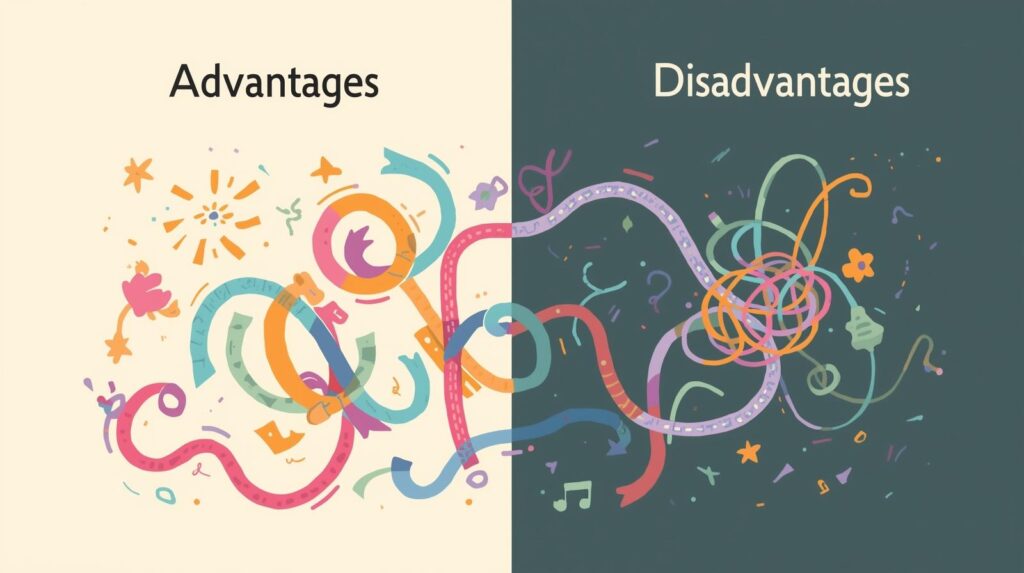
Gumloop enables collaboration that was previously impossible due to privacy or legal barriers. Its cryptographic guarantees provide stronger protection than anonymization or access controls alone. Because it avoids data centralization, it reduces systemic risk and vendor lock-in. Its open, permissionless design fosters global participation. Most importantly, it aligns AI development with human rights—making progress compatible with dignity.
Notable Disadvantages
Gumloop introduces computational overhead due to encryption and distributed coordination, which can slow training. Setting up secure nodes requires technical expertise, potentially limiting adoption among non-technical users. Debugging model performance is harder when raw data is inaccessible. Incentive alignment (e.g., rewarding high-quality contributors) remains a complex design challenge. And because it prioritizes privacy over convenience, it may feel less “seamless” than centralized alternatives.
Conclusion
A New Social Contract for AI
Gumloop is more than a technical platform—it is a reimagining of how intelligence should be built in a connected world. It rejects the false choice between innovation and privacy, proving that we can advance AI with people, not on them.
It is not about building the biggest model. It is about building the fairest system. And in an era where data is power, Gumloop ensures that power remains where it belongs—with the people who create it.


